You set up the campaign. The creative looked good. Cost-per-lead came in lower than your website traffic. On paper, it worked.
Then your sales team spent three days chasing leads who either didn’t remember submitting the form, couldn’t explain what they actually needed, or were nowhere near ready to buy.
This is the FB lead form trap — and it catches SMEs constantly.
What Facebook Lead Forms Actually Do Well
To be fair, they solve real problems.
They remove friction at the top of the funnel. Meta pre-fills name, email, and phone number from the user’s profile. No typing. No redirecting to an unfamiliar website. The prospect clicks, confirms, submits — all without leaving their feed. For mobile users especially, this matters.
They’re fast to launch. No landing page to build, no developer needed. You can have a lead gen campaign live in an afternoon.
The cost-per-lead looks attractive. Keeping users inside the platform rather than driving them to a website typically produces more submissions at a lower unit cost. Your media buyer will show you a slide with a very good number on it.
These are legitimate advantages. The problem is what you’re actually getting for that price.
The Contact Form Problem — Now With a Meta Logo
Strip away the platform, and a Facebook lead form is a contact form. Static fields. Predetermined questions. One-directional data collection. The same for every lead, every time.
The form doesn’t know if it’s talking to a business owner ready to sign this month or someone who clicked out of curiosity during their lunch break. It doesn’t adjust. It doesn’t respond. It just collects.
And every problem that makes contact forms a poor qualification tool applies here too — amplified by the fact that the mental commitment required to submit is even lower.
It Feels Like an Interrogation
Six to ten questions. No explanation of why each one is being asked. No sense of progress or payoff. For a prospect who doesn’t already trust your brand, this is a significant ask.
The leads who push through and complete it aren’t necessarily more qualified. They’re just more tolerant of friction. Meanwhile, the genuinely interested prospect who hit question five and couldn’t work out why you needed that information — they’re gone.
Every Lead Gets the Same Questions
A prospect who’s been struggling with a specific operational problem for six months has different needs, different urgency, and different buying signals than someone who’s just started exploring their options. Your form asks them the same things.
The questions that qualify one type of lead poorly qualify the other. And because you can’t branch or adapt, you end up designing a form for nobody in particular.
No Objection Handling
Somewhere between question three and question seven, a prospect hesitates. Maybe they don’t understand the question. Maybe a field triggered a concern about cost. Maybe they want to know what happens after they submit.
A static form cannot respond. It sits there. The prospect exits, and they don’t come back — not because they weren’t interested, but because nothing in the process gave them a reason to keep going.
Predefined Options Create False Data
Dropdown menus and multiple choice answers are clean. They’re also misleading. When a prospect selects the closest available option rather than their actual answer, you get structured data that doesn’t reflect reality.
You think you know their budget range. You think you know their timeline. What you actually know is which box they ticked.
You Only Learn What You Asked
The information a lead form captures is bounded by the questions you put in it. Everything else — why they clicked, what they’ve already tried, what’s actually blocking them, how decisions get made in their business — stays invisible.
The qualifying information that separates a real opportunity from a tyre-kicker rarely fits neatly into a form field.
The Lead Quality Problem Nobody Talks About
Here’s what makes the low CPL figure misleading.
Because auto-fill removes almost all effort from submitting, a significant portion of your leads submitted without much thought. They saw an ad, tapped twice, and moved on. By the time you call, they’ve forgotten they even interacted with your brand.
Ask any sales team running Facebook lead form campaigns — a significant share of submissions go cold before a conversation even starts.
The CPL looks good. The cost-per-qualified-lead tells a different story.
Research from Harvard Business Review found the odds of contacting a lead drop sharply after the first five minutes — a window most SME sales teams simply aren’t set up to hit. By the time you do, the moment has passed.
Every lead then goes into the same follow-up sequence. Ready-to-buy gets the same nurture email as just-browsing.
High-value gets the same treatment as not a fit. There’s no mechanism to sort, route, or respond differently — because the form didn’t capture what you’d need to do that.
What the Better Model Looks Like
The goal isn’t to stop using Facebook ads. The platform reaches the right audiences. The targeting works.
The problem is what happens after the click.
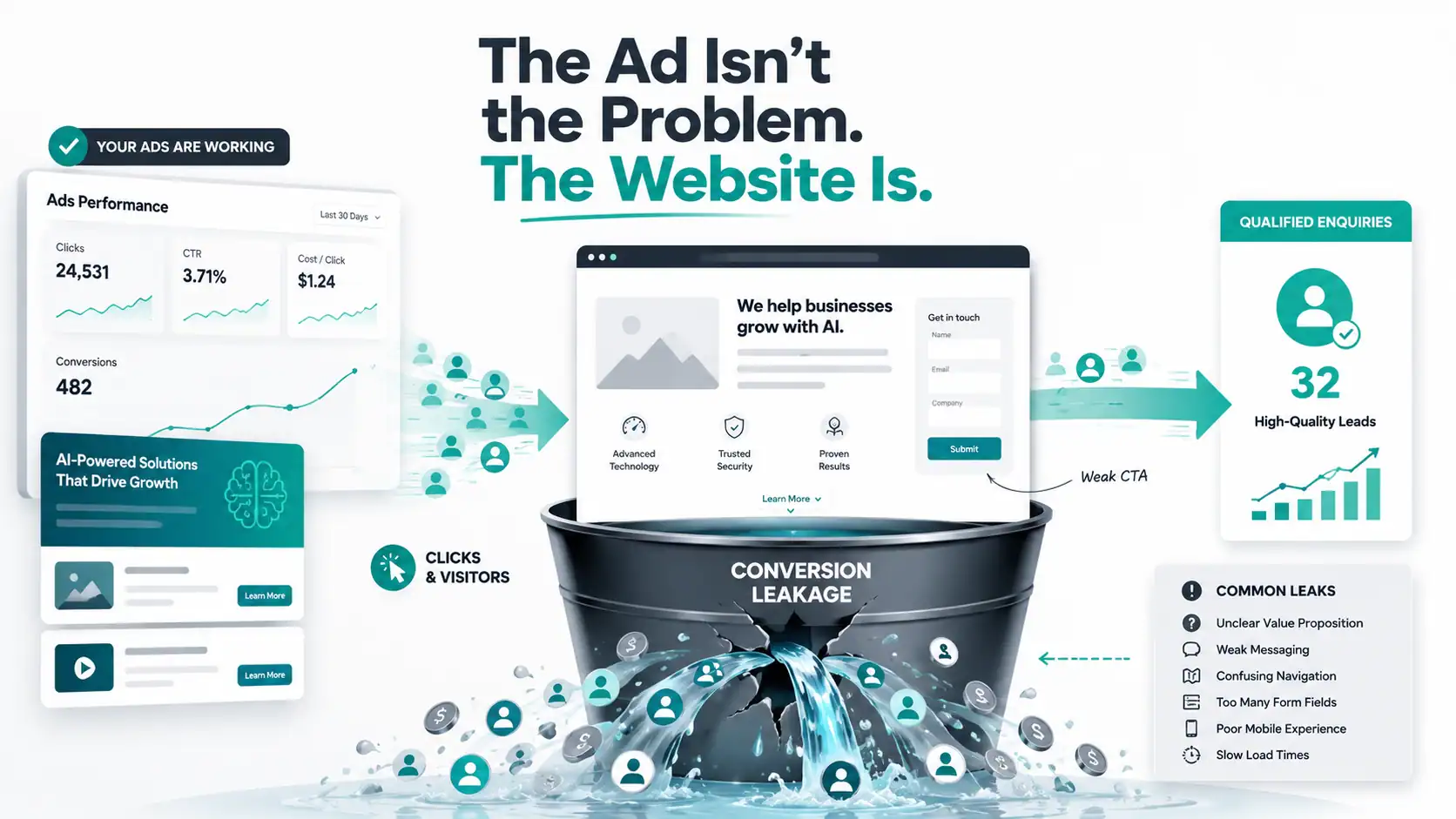
Instead of sending traffic to a static form, a conversational intake flow handles the same job — but differently. It asks questions based on what the prospect has already told it. It explains why it’s asking. It responds when someone hesitates. It handles common objections before they become a reason to exit.
By the time the conversation ends, you don’t have six form fields. You have a qualified lead, a clear picture of their situation, and a natural handoff point — whether that’s a booked call, a tailored proposal, or a polite acknowledgement that it’s not the right fit yet.
The prospect gets a better experience. You get better information. Your sales team spends time on leads that are actually worth pursuing.
The Real Cost of a Cheap Lead
A low cost-per-lead only saves you money if the leads are worth chasing.
When they’re not, you’ve paid for the click and then paid again — in time, in follow-up effort, in the opportunity cost of not being in front of a better prospect.
Facebook lead forms are a volume tool. For businesses where volume alone drives returns, they work. For SMEs selling higher-value services where qualification matters, they create a problem that shows up downstream — in conversion rates, in sales cycle length, and in the feeling that “leads are coming in but nothing’s closing.”
The fix isn’t better ad creative. It’s what happens after the click.